
Did you know that strong biceps are not just a result of gym workouts? You can achieve toned biceps in the comfort of your own home. With the right exercises and guidance, you can develop impressive biceps without stepping foot in a gym.
Building strong arms is not just about aesthetics; it’s also about functional strength. By incorporating effective bicep exercises into your workout routine, you can improve your overall muscle strength and enhance your physical performance.
Key Takeaways
- Learn the anatomy of biceps muscles and their importance
- Discover the advantages of training biceps at home
- Explore exercises suitable for all fitness levels
- Create effective bicep workouts with minimal or no equipment
- Improve overall arm strength and muscle development
Understanding Bicep Anatomy and Function
Understanding the anatomy of your biceps is crucial for effective workouts. The biceps brachii, or simply biceps, are a large muscle located at the front of the upper arm. They consist of two heads: the long head and the short head.
The Structure of Your Biceps
The biceps are made up of two distinct heads: a long head and a short head. The long head is on the outside of your arm, while the short head is on the inside. When you flex your arm, the visible ‘peak’ is primarily due to the long head. The short head provides support and width, lying underneath this ‘peak’.

- The biceps brachii is a two-headed muscle that runs along the front of your upper arm, consisting of a long head and a short head that work in tandem.
- These muscles are primarily responsible for flexing the elbow and supination, which is rotating your forearm to turn your palm upward.
Why Strong Biceps Matter for Daily Activities
Having strong biceps is not just about aesthetics; they play a vital role in everyday activities. Strong biceps enable you to lift objects, carry groceries, and maintain proper posture. Moreover, the biceps work synergistically with other muscle groups, including the brachialis and the brachioradialis in the forearms, highlighting the importance of comprehensive arm training for overall strength.
Benefits of Training Biceps at Home
Training your biceps at home offers numerous benefits that can enhance your overall fitness journey. You can build strong biceps while enjoying the comfort and privacy of your own home, making it an ideal solution for those who prefer not to go to the gym.
Cost-Effectiveness and Convenience
One of the primary advantages of home-based bicep workouts is their cost-effectiveness. By eliminating the need for gym memberships, you can save hundreds or even thousands of dollars annually. Additionally, home workouts provide unmatched convenience, allowing you to exercise at any time that fits your schedule without the need to commute or wait for equipment. This flexibility makes it easier to maintain consistency, which is crucial for muscle development.
Privacy and Comfort Factors
Home training also offers the benefit of privacy, creating a judgment-free environment where you can focus on proper form and technique without feeling self-conscious. You have complete control over your workout environment, including your music, temperature, and equipment setup, allowing you to create optimal conditions for productive training sessions. As noted by fitness experts, “The comfort of your own space can significantly enhance your workout experience.”
| Benefits | Description |
|---|---|
| Cost-Effectiveness | Saves money by eliminating gym membership costs |
| Convenience | Allows for flexible scheduling without commuting time |
| Privacy | Provides a judgment-free environment for focused workouts |
| Comfort | Enables control over workout environment for optimal conditions |
Essential Equipment for Home Bicep Workouts
Home bicep workouts can be efficiently conducted with minimal or no specialized equipment. The key is to understand the available options and how they can be utilized to effectively target your biceps.
No-Equipment Options
You can start your bicep training without any equipment by leveraging bodyweight exercises such as chin-ups, inverted rows, and isometric holds. These exercises challenge your biceps through resistance against your own body weight, providing an effective workout.
Basic Equipment Recommendations
For those looking to invest in their home gym, dumbbells and resistance bands are excellent starting points. Adjustable dumbbells offer a versatile way to train your biceps with incremental weight progression, while resistance bands provide a cost-effective and space-efficient solution with varying resistance levels.
Creating DIY Weights with Household Items
In the absence of commercial weights, household items can serve as effective substitutes. Items like gallon water jugs (approximately 8 pounds each), backpacks filled with books, or even paint cans can be repurposed as makeshift weights for your bicep exercises, including variations of the curl.
By starting with minimal or no equipment and gradually adding more as you progress, you can create an effective home bicep workout routine that suits your needs and fitness level.
Proper Form and Technique Fundamentals
Mastering the fundamentals of proper form and technique is crucial for maximizing the effectiveness of bicep exercises. Proper form ensures that your biceps are effectively targeted, reducing the risk of injury and enhancing overall muscle development.
Common Bicep Training Mistakes to Avoid
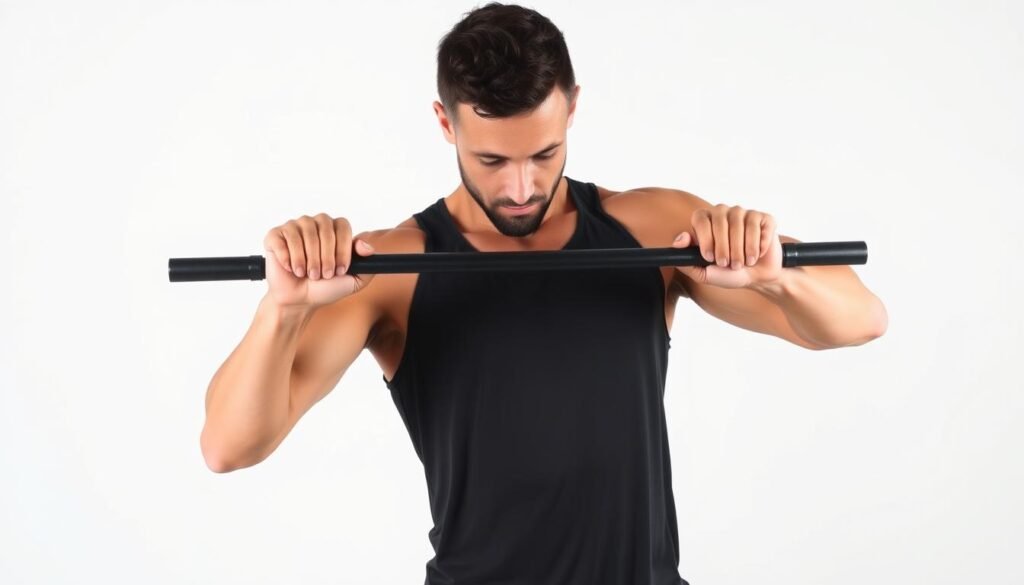
One of the most common mistakes in bicep training is using momentum to lift weights, rather than relying on controlled muscle contraction. This not only reduces the effectiveness of the exercise but also increases the risk of injury. Maintaining proper posture is essential, with a straight back, shoulders pulled back and down, and a slight bend in the knees to create a stable foundation for every movement.
- Keep your elbows close to your torso throughout curling movement to prevent shoulder recruitment and maintain tension on the biceps.
- Control the negative portion of each bicep exercise, taking 2-3 seconds to lower the weight.
- Ensure a proper range of motion by fully extending your arms at the bottom and curling until maximum bicep contraction at the top.
Mastering the Mind-Muscle Connection
The mind-muscle connection is critical for effective bicep training. By consciously focusing on the contraction of your biceps during each repetition, you significantly enhance muscle fiber recruitment and overall exercise effectiveness. This focused approach helps in achieving better results from your workout.
Bodyweight Bicep Workouts at Home
Effective bicep development can be achieved through various bodyweight exercises performed at home. These exercises not only target the biceps but also engage other muscle groups, providing a comprehensive upper body workout.
Chin-Ups and Modifications
Chin-ups are considered the gold standard for bodyweight bicep development. To perform a chin-up, grab a pull-up bar with your hands slightly closer than shoulder-width apart and palms facing backward. Hang on the bar with your core engaged, then pull yourself up by pulling your elbows down and tightening your biceps until your chin passes the bar. Hold for two seconds before slowly lowering yourself down. For those unable to perform full chin-ups, modifications such as negative chin-ups, band-assisted chin-ups, or chair-assisted variations can help build progressive strength.
Chin-Up Variations:
- Negative chin-ups focus on the lowering phase.
- Band-assisted chin-ups reduce the weight you need to lift.
- Chair-assisted variations provide support during the exercise.
Push-Up Variations for Biceps
While push-ups are typically considered a chest exercise, certain variations can significantly engage the biceps. Diamond push-ups, for instance, require positioning your hands close together under your chest, forcing your biceps to work as stabilizers. Reverse-grip push-ups, where your fingers point toward your feet, also create significant bicep engagement during the movement.

Plank-Based Bicep Exercises
Plank-based exercises like plank up-downs and side plank rotations challenge your biceps through stabilization while engaging your core. These exercises require maintaining a plank position and performing specific movements that activate the biceps.
Isometric Bicep Holds
Isometric bicep holds involve maintaining a fixed position against resistance, creating intense muscle fiber recruitment. These can be performed using doorways, furniture, or simply by holding a flexed position. Isometric holds are an effective way to strengthen your biceps without moving your joints.
The following table summarizes the bodyweight bicep exercises discussed:
| Exercise | Description | Muscle Engagement |
|---|---|---|
| Chin-Ups | Pulling yourself up on a bar with palms facing backward. | Biceps, Back |
| Diamond Push-Ups | Push-ups with hands close together under the chest. | Biceps, Chest, Triceps |
| Plank Up-Downs | Alternating arms in a plank position. | Biceps, Core |
| Isometric Bicep Holds | Holding a flexed position against resistance. | Biceps |
Dumbbell Bicep Exercises for Home Training
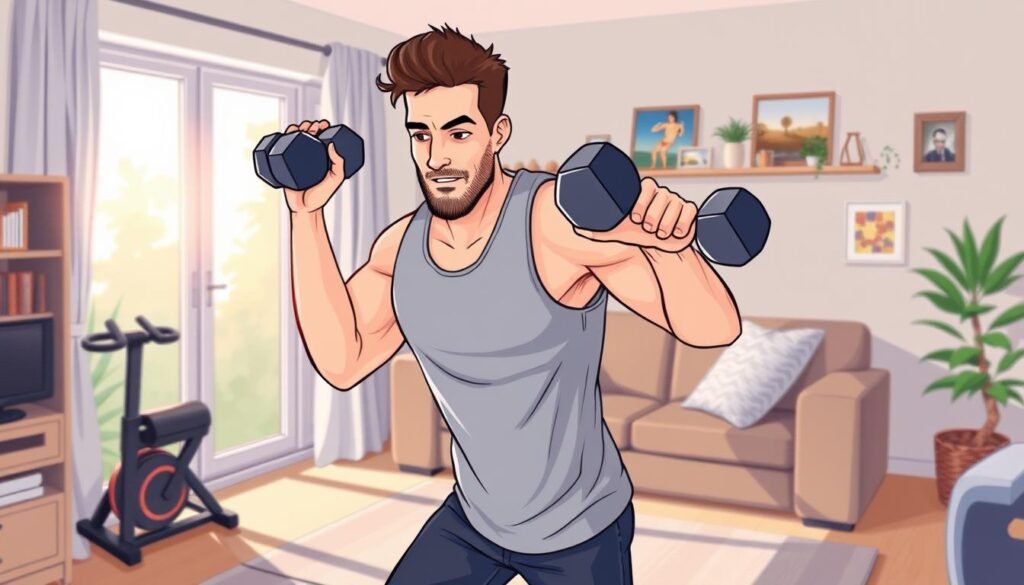
Dumbbell training is a highly effective method for building stronger biceps without the need for a gym. Dumbbells offer a versatile way to perform a variety of exercises that target the biceps from different angles, ensuring comprehensive development.
Classic Bicep Curls and Variations
Classic bicep curls form the foundation of dumbbell bicep training. To perform them, stand with your feet shoulder-width apart, holding dumbbells with your palms facing forward. Curl the weights toward your shoulders with controlled movement, then lower them back down. Variations include changing grip positions or using different types of dumbbells.
Hammer Curls for Long Head Development
Hammer curls are performed with palms facing each other throughout the movement. This exercise specifically targets the long head of the biceps and the brachialis, contributing to arm thickness and stability. Hammer curls are an excellent addition to any bicep workout routine.
Concentration Curls for Peak Contraction
Concentration curls maximize bicep peak development by isolating the muscle. To perform concentration curls, sit on a bench, brace your elbow against your inner thigh, and curl a single dumbbell with complete focus on the contraction. This exercise is highly effective for achieving a well-defined bicep peak.
Reverse Curls for Forearm Strength
Reverse curls, executed with an overhand grip (palms facing down), target the often-neglected brachioradialis in the forearm while still engaging the biceps. This exercise contributes to comprehensive arm development, enhancing both strength and aesthetics.
Alternating between these dumbbell curl variations within the same workout creates comprehensive bicep development by targeting different heads and surrounding muscles from multiple angles. For those without traditional dumbbells, these exercises can be performed with household items like water bottles or food cans, focusing on proper form rather than heavy weight initially.
Resistance Band Bicep Workouts
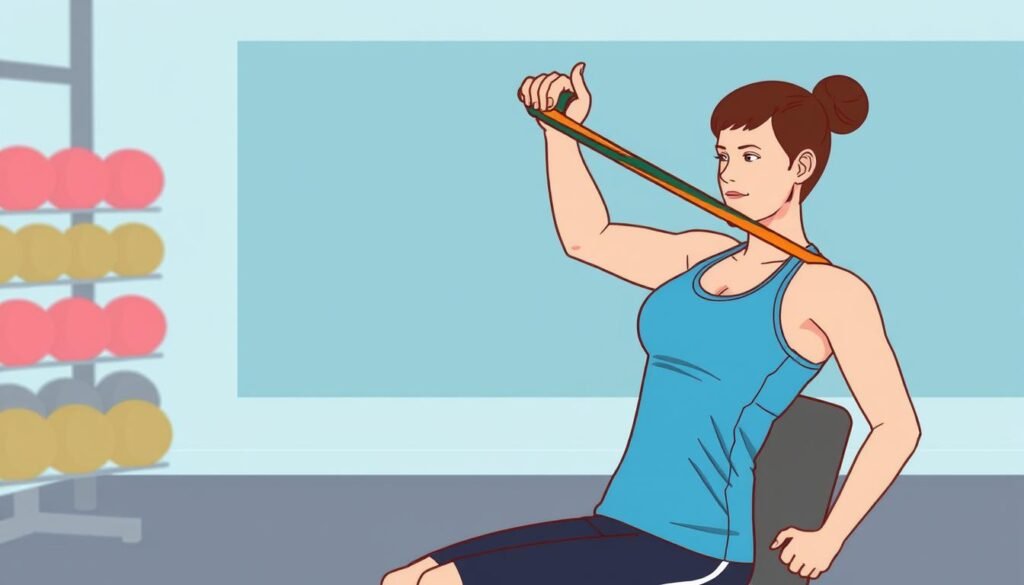
For those looking to enhance their bicep workout without the need for heavy equipment, resistance bands are an ideal solution. Resistance bands provide a versatile and effective way to challenge your biceps, offering variable resistance throughout the curling motion.
Band Curl Variations
Standard band curls are performed by standing on the middle of the band with feet shoulder-width apart, gripping the handles with palms facing up, and curling against the resistance with controlled movement. Banded hammer curls follow the same principle but with palms facing each other, targeting the long head of the biceps and brachialis for comprehensive arm development.
Resistance bands provide variable resistance throughout the curling motion, creating greater tension at the top of bicep movements where muscles are typically strongest. This makes them highly effective for bicep training.
Anchored Band Exercises
Anchored band exercises, where one end of the band is secured to a door or stable object, allow for unique angles of resistance that can’t be achieved with free weights. High-to-low band curls, performed by anchoring the band above head height, create constant tension throughout the movement and particularly challenge the short head of the biceps.
The portability and versatility of resistance bands make them ideal for home bicep training, as they can be used in any room and easily adjusted for progressive resistance as strength increases.
Beginner-Friendly Bicep Workout Routine
Embarking on a bicep workout journey at home can be both exciting and intimidating, especially for beginners. A well-structured workout plan is essential to achieve toned biceps. At Fit Glow Guide, we emphasize the importance of a consistent and progressive workout routine.
A beginner-friendly bicep workout routine should include a mix of compound and isolation exercises to effectively target the biceps. This approach ensures overall muscle development and helps prevent plateaus.
Getting Started: A 2-Week Plan
To get started, beginners should focus on mastering proper form with lighter weights or resistance bands before increasing the intensity. For the first week, perform 2 sets of 10-12 repetitions per exercise with light resistance, focusing on proper technique and complete range of motion.
- Start with 2-3 bicep workouts per week, allowing at least 48 hours between sessions for proper muscle recovery and growth.
- A beginner-friendly bicep workout includes 3-4 exercises: start with compound movements like assisted chin-ups or inverted rows, followed by isolation exercises like basic curls.
Proper Progression for Beginners
In the second week, maintain the same exercises but aim for 3 sets of 10-12 repetitions, slightly increasing resistance if form remains perfect. It’s crucial to prioritize consistent progression through perfect form rather than increasing weight too quickly, which can lead to injury and improper muscle development.
| Week | Sets | Reps | Resistance |
|---|---|---|---|
| 1 | 2 | 10-12 | Light |
| 2 | 3 | 10-12 | Slightly Increased |
Tracking your workouts in a journal or app can help monitor progress and ensure you’re gradually increasing either repetitions, sets, or resistance each week. By following this structured approach, beginners can effectively tone their biceps at home.
Intermediate Home Bicep Training Program
For those looking to intensify their home bicep workouts, intermediate training techniques offer a powerful solution. At this stage, it’s not just about doing more; it’s about doing it smarter.
Increasing Intensity Without Adding Weight
One of the key strategies in intermediate bicep training is increasing the intensity of your workouts without necessarily adding more weight. This can be achieved through various techniques that challenge your biceps in new ways.
Time under tension is a critical factor. By slowing down the eccentric phase of your curls to 3-5 seconds, you significantly increase muscle fiber recruitment and growth stimulus. This simple adjustment can make a substantial difference in your bicep development.
Supersets and Drop Sets at Home
Supersets and drop sets are advanced techniques that can be effectively used in home workouts to boost intensity. A superset involves performing two bicep exercises back-to-back without rest, such as hammer curls followed by standard curls. This creates metabolic stress that promotes muscle growth.
- Supersets pair two bicep exercises performed consecutively, enhancing metabolic stress and muscle growth.
- Drop sets involve performing an exercise to near failure, then reducing the weight by 20-30% and continuing with more repetitions.
These techniques should be used strategically to prevent overtraining while providing progressive overload for continued bicep development.
| Technique | Description | Benefit |
|---|---|---|
| Supersets | Two exercises performed back-to-back | Increased metabolic stress |
| Drop Sets | Reducing weight after near failure | Extended set beyond normal capacity |
Advanced Bicep Workout Strategies
For those looking to take their bicep training to the next level, advanced workout strategies are essential. Advanced bicep training incorporates sophisticated techniques that maximize muscle fiber recruitment, metabolic stress, and mechanical tension—the three primary drivers of muscle growth.
Time Under Tension Techniques
Time under tension techniques are crucial for advanced trainees. These include “1.5 reps” (performing a full rep followed by a half rep before returning to the start position) and “pulse reps” (small partial movements at the point of maximum contraction). Studies have proven that bicep curls, performed with the EZ bar, are one of the best exercises for big biceps. The EZ bar requires a semi-supinated grip, maximizing the activation of the biceps, brachialis, and brachioradialis.
- Isometric holds at various points in the range of motion can be incorporated between regular repetitions to increase time under tension and target sticking points.
- Maintaining perfect form is crucial even for advanced trainees, as technique breakdown negates the benefits of these sophisticated training methods.
Creating Mechanical Dropsets
Mechanical dropsets leverage exercise mechanics by performing three variations of the same movement in sequence, from hardest to easiest, without rest. For example, reverse curls to hammer curls to standard curls. This technique helps in maximizing muscle growth by keeping the arm muscles under constant tension.
- Advanced trainees should implement periodization—systematically varying volume, intensity, and exercise selection over weeks or months—to prevent plateaus and ensure continued bicep development.
- Pre-exhaustion techniques, where isolation exercises precede compound movements, can create novel stimulus for bicep growth when traditional approaches have stalled.
Nutrition Tips for Bicep Development
To achieve toned biceps, it’s essential to understand the nutritional requirements that support muscle growth. A well-planned nutrition strategy complements your workout routine, ensuring that your biceps receive the necessary nutrients to develop strength and size.
Protein Requirements for Muscle Growth
Adequate protein intake is crucial for bicep development. For individuals engaged in regular resistance training, a daily protein intake of 1.6-2.2 grams per kilogram of body weight is recommended. This supports muscle protein synthesis, which is vital for muscle growth and repair.
- Include complete protein sources like lean meats, fish, eggs, and dairy products in your diet.
- For plant-based diets, combine protein sources like rice and beans to achieve a complete amino acid profile.
Meal Timing Around Your Workouts
Strategic meal timing can enhance bicep growth. Consuming protein within 2 hours post-workout is particularly beneficial for muscle protein synthesis. Additionally, carbohydrates play a supporting role by replenishing muscle glycogen and providing energy for intense workouts.
- Balance your meals with protein and carbohydrates to create an anabolic environment.
- Stay hydrated by aiming for at least 3-4 liters of water daily to support muscle function and recovery.
By focusing on these nutritional strategies, you can support your bicep workout routine and achieve your fitness goals. Consistency in nutrition is as important as consistency in training, so make sure to maintain a balanced diet to see optimal results.
Conclusion: Your Path to Toned Biceps at Home
Building strong, toned biceps at home is a journey that requires dedication and the right guidance. With consistent application of the principles and exercises outlined in this guide, achieving impressive biceps is absolutely achievable.
Remember, bicep development is progressive. Start with the basics, master proper form, and gradually increase intensity as your strength and confidence grow. Combine your bicep workouts at home with balanced nutrition and adequate recovery for comprehensive physical development.
Track your progress and stay motivated. Your bicep development journey is unique; embrace the process and celebrate small victories. With Fit Glow Guide, you’re supported every step of the way—Your Body, Your Glow, Your Guide.
FAQ
What is the best way to target my biceps during a workout?
To effectively target your biceps, focus on exercises that involve curling movements with your palms facing forward. Using dumbbells or resistance bands can help isolate the bicep muscles.
How often should I train my biceps?
For optimal bicep development, it’s recommended to train your biceps 2-3 times per week, allowing for adequate rest and recovery time between sessions.
Can I build strong biceps without going to the gym?
Yes, you can build strong biceps at home using bodyweight exercises, dumbbells, or resistance bands. With a well-structured workout routine, you can achieve significant gains in bicep strength and size.
What are some common mistakes to avoid when doing bicep curls?
Common mistakes to avoid when doing bicep curls include swinging the weight, using too much weight, and not fully contracting the bicep muscle. Focus on using proper form and technique to get the most out of your workout.
How can I modify bicep exercises to suit my fitness level?
You can modify bicep exercises by adjusting the weight, reps, or sets, or by using different grip positions or angles. For example, you can do hammer curls or preacher curls to target different parts of the bicep muscle.
What role does nutrition play in bicep development?
Adequate nutrition, particularly protein intake, is essential for muscle growth and repair. Ensure you’re consuming enough protein to support your bicep development goals.
Can I do bicep workouts with injured shoulders or elbows?
If you have an injured shoulder or elbow, it’s essential to consult with a healthcare professional or fitness expert to determine the best course of action. They can help you modify your workout routine to avoid exacerbating the injury.