Are you preparing for a facial treatment and wondering if you should apply moisturizer beforehand? This is a common dilemma among skincare enthusiasts seeking to maximize their treatment results.
Understanding the proper pre-facial preparation can significantly enhance the effectiveness of your professional skincare treatment. At Fit Glow Guide, we believe in personalized skincare approaches that honor your unique skin needs while maximizing professional treatment benefits.
Proper preparation can make the difference between good and exceptional results from your facial investment. Let’s explore the science behind pre-facial skincare routines and how they impact the overall treatment experience.
Key Takeaways
- Pre-facial preparation is crucial for maximizing treatment results.
- Moisturizing before a facial can impact the effectiveness of the treatment.
- A personalized skincare approach can enhance the benefits of professional treatments.
- Understanding your skin needs is essential for optimal pre-facial preparation.
- Proper preparation can lead to exceptional results from your facial investment.
The Pre-Facial Skincare Debate: To Moisturize or Not?
The pre-facial skincare debate centers around a crucial question: should you moisturize before your appointment? This discussion has led to various contradicting advice, leaving many to wonder about the best approach for their skincare routine.
Many clients mistakenly believe they should arrive with a completely bare face, avoiding all products including moisturizer before their facial appointment. However, understanding your skin’s natural moisture barrier and how it impacts professional treatments is essential for making informed decisions about pre-facial skincare.
Understanding Your Skin’s Needs Before Treatment
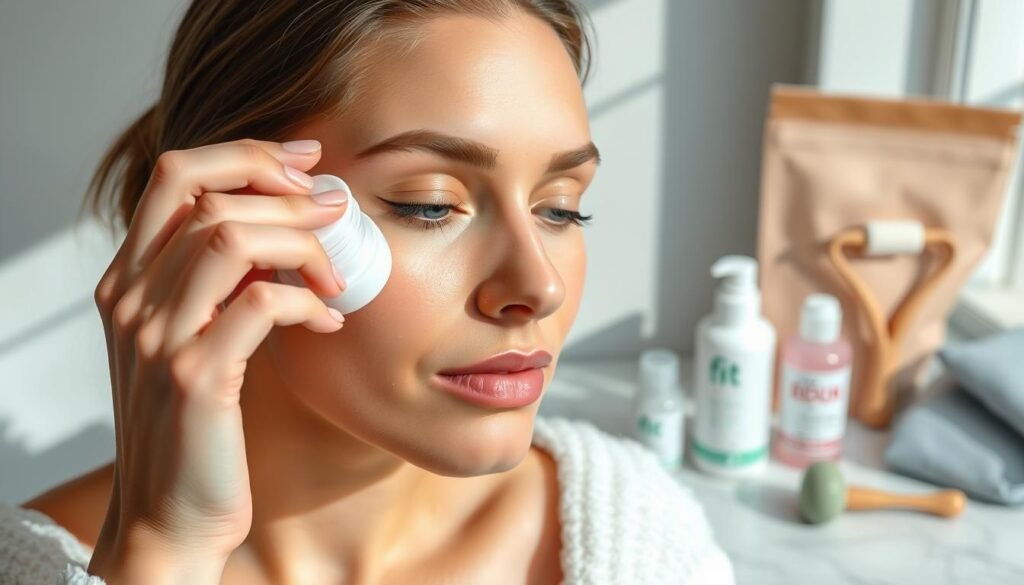
Your skin’s condition upon arrival provides valuable information to your esthetician about your skin type, concerns, and how it responds to different products. Arriving with moisturized skin actually helps the esthetician better assess your skin’s natural state and customize the treatment accordingly.
To prepare for your appointment, it’s recommended to maintain your normal skincare routine, including moisturizer. This approach ensures that your skin is in its typical state, allowing for a more accurate assessment and effective treatment.
| Skin Type | Pre-Facial Moisturizing Recommendation |
|---|---|
| Dry Skin | Moisturize thoroughly to hydrate the skin |
| Oily Skin | Use a lightweight moisturizer to avoid clogging pores |
| Sensitive Skin | Apply a gentle, fragrance-free moisturizer |
What Professional Estheticians Recommend
Professional estheticians generally recommend maintaining your normal skincare routine, including moisturizer, before your facial appointment. The consultation process is crucial – being honest about your skincare routine, concerns, and goals helps your esthetician select the most appropriate treatments and products.
As part of your pre-facial preparation, it’s helpful to specify products you currently use on your skin, including makeup. Knowing what you are putting on your skin is a huge help when deciding what products to use during your treatment.
By understanding your skin’s needs and following the recommendations of professional estheticians, you can create an optimal canvas for your facial treatment while maintaining skin health.
Should I Moisturize Before a Facial? Expert Answers
Pre-facial skincare routines can significantly impact the effectiveness of your facial treatment. As you prepare for your appointment, understanding the role of moisturizer in your pre-facial routine is crucial.
Benefits of Moisturizing Pre-Treatment
Moisturizing before a facial offers several benefits for your skin. Expert estheticians generally recommend moisturizing as it helps maintain your skin’s natural moisture barrier and prevents dehydration before treatment. Moisturized skin is more receptive to professional treatments, allowing products to penetrate more effectively. The benefits include reduced sensitivity during treatment, better product absorption during the facial, and a more accurate assessment of your true skin condition.
When to Skip Pre-Facial Moisturizer
While moisturizing before a facial is generally recommended, there are specific situations when you should skip it. If your esthetician has specifically instructed you not to moisturize, it’s best to follow their advice. Certain facial treatments, such as deep chemical peels or specific laser treatments, may require you to arrive with completely bare skin. Always follow your provider’s instructions to ensure the best results facial.
Choosing the Right Moisturizer for Your Skin Type
Selecting the right moisturizer for your pre-facial routine depends on your skin type. For oily or acne-prone skin, lightweight, non-comedogenic formulas work best. Dry skin types benefit from richer formulations. It’s also important to consider the type of oil in your moisturizer; water-based formulations are generally safer before a facial as they are less likely to interfere with treatments. Your Fit Glow Guide should include selecting products that hydrate without clogging pores or leaving residue.
| Skin Type | Recommended Moisturizer | Why |
|---|---|---|
| Oily/Acne-Prone | Lightweight, non-comedogenic | Won’t clog pores or exacerbate acne |
| Dry | Richer formulations | Provides intense hydration |
| Sensitive | Fragrance-free, hypoallergenic | Reduces risk of irritation |
By choosing the right moisturizer and applying it at the right time (1-2 hours before your facial), you can enhance the effectiveness of your facial treatment and achieve better skincare results.
Complete Pre-Facial Preparation Guide
Preparing for a facial involves more than just showing up to your appointment; it requires a thoughtful skincare routine in the days leading up to your treatment. To ensure you get the most out of your facial, follow this guide to prepare your skin for the best possible results.
One Week Before: Skincare Adjustments
One week before your facial appointment, it’s crucial to start making adjustments to your skincare routine. Discontinue using strong active ingredients like retinoids, glycolic acid, or other chemical exfoliants that could sensitize your skin. These products can make your skin more sensitive and potentially irritate it during the facial treatment. Additionally, avoid excessive sun exposure and tanning beds, as sun damage can limit the types of treatments your esthetician can safely perform.
24-48 Hours Before: What to Avoid
In the 24-48 hours leading up to your facial appointment, there are several activities you should avoid to prevent skin irritation. Refrain from waxing, threading, or any other potentially irritating skin treatments, as these can cause sensitivity and make your skin more reactive during the facial. It’s also advisable to avoid physical exfoliation during this period to prevent over-sensitizing your skin.
By avoiding these activities, you can help ensure that your skin is in the best possible condition for your facial treatment, allowing your esthetician to tailor the treatment to your skin’s specific needs.
Day of Your Facial: Final Preparations
On the day of your facial, continue your regular cleansing and moisturizing routine, but try to avoid applying heavy makeup if possible. While your esthetician will cleanse your skin before the treatment, wearing minimal makeup allows for more time for the actual treatment. Make sure to arrive on time and wear comfortable clothing that provides easy access to your neck and shoulders, as these areas are often included in facial treatments.
It’s also a good idea to communicate any last-minute skin concerns or changes to your esthetician before the treatment begins, ensuring they can adjust their approach accordingly to provide the best possible results.
What to Expect During Your Facial Treatment
When you arrive for your facial treatment, you’ll be guided through a carefully structured process designed to address your specific skin concerns. This experience is tailored to provide you with a relaxing and rejuvenating atmosphere, allowing you to fully benefit from the treatment.
The Facial Process Step-by-Step
A professional facial typically follows a structured process that includes several key steps. Your esthetician will begin by thoroughly cleansing your skin, removing any makeup, dirt, and moisturizer you applied before arriving. This creates a clean canvas for the treatment.
The next steps may include analysis of your skin under bright light, exfoliation to remove dead skin cells, and extractions if needed. Treatment masks and specialized serums are then applied based on your specific skin concerns and goals.
| Step | Description | Benefits |
|---|---|---|
| Cleansing | Removing makeup, dirt, and impurities | Creates a clean canvas for treatment |
| Analysis | Examining skin under bright light | Identifies specific skin concerns |
| Exfoliation | Removing dead skin cells | Reveals smoother, brighter skin |
Communicating with Your Esthetician
Clear communication with your esthetician is crucial to ensure that you receive the best possible facial treatment. Don’t hesitate to express your comfort level, ask questions about products being used, or discuss specific concerns during your treatment.
By understanding what happens during a facial treatment, you can make sure to fully enjoy and benefit from the experience. Your esthetician will work with you to create a personalized experience that addresses your unique skin needs and goals.
Post-Facial Care for Maximum Glow
A facial is just the beginning; proper aftercare is what truly unlocks its full potential. To get the best results from your facial, it’s essential to follow a thoughtful post-treatment care routine.
The hours and days following your facial are crucial for maximizing and extending the benefits of your treatment. Immediately after your facial, your skin is in an optimal state to absorb nutrients, so it’s vital to avoid touching your face with your hands to prevent transferring bacteria that could compromise your freshly cleansed pores.
For at least 12-24 hours post-treatment, avoid applying makeup to allow the professional products used during your facial time to continue working and your skin to fully benefit from the treatment. Sun protection becomes even more critical after a facial, as your newly exfoliated skin is more susceptible to UV damage – wear a broad-spectrum SPF and limit direct sun exposure for at least 48 hours.
To maintain the glow, avoid heat-inducing activities and exfoliation for a few days. Stay well-hydrated internally by drinking plenty of water to help flush toxins and enhance your skin’s natural glow from within. By following these guidelines, you’ll be able to get the best out of your facial and enjoy a radiant, healthy-looking complexion.
At Fit Glow Guide, we emphasize protection, hydration, and allowing your skin the time it needs to showcase the full benefits of your professional treatment. Schedule your next facial according to your esthetician’s recommendations to maintain optimal results.